HUNGARY

State Secretary for International Communication and Relations Zoltán Kovács explained: “We’ve consistently focused on connectivity, openness and attracting investment from across the world. For example, we have strong ties with Europe, the U.S. and China and we maintain open dialogue with Russia. This is not contradictory—it’s our balanced approach.” The results of that approach are evident in the automotive industry, Hungary’s largest economic contributor, that received nearly 40 percent of 2024’s investment inflows. Historically, the biggest players in this sector were Western manufacturers such as BMW, Audi and Mercedes; however, the industry’s dynamics are changing. “In 2024 and 2025, Chinese investment led, bringing advanced high-value sectors like electric vehicles and batteries,” Kovács said. “Our goal is for all investments to coexist, foster competition and boost innovation.”

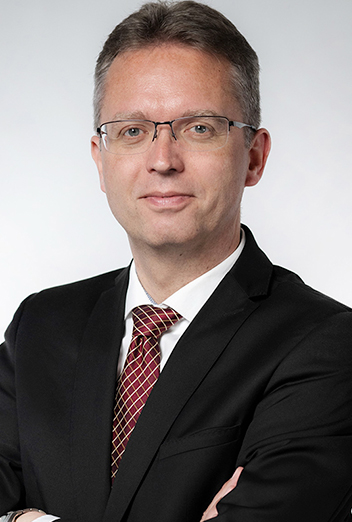

The government has invested to encourage innovation in not just the automotive sector but other manufacturing areas that are seeing significant inward investment, including electronics, information technology, life sciences and agribusiness. Minister of Culture and Innovation Balázs Hankó pointed out: “In the past ten years, we’ve tripled our investment in research, development and innovation—the third-highest increase in the EU. We’ve also restructured our higher education system, doubled our number of researchers and more than doubled our support for them to over $120 million. Our aim is to be among Europe’s top 10 nations for innovation by 2030.” Hungary’s nurturing of new technologies has led to an expanding startup ecosystem containing substantial opportunities for international investors, according to Csaba Bőthe, CEO of the Hungarian Association for Innovation, a body made up of universities, research institutes and businesses, which promotes innovative economic growth.
Bőthe explained: “We’re looking for innovation partners for Hungarian tech companies that are showing strong results but need knowledge, experience and international partnerships to successfully bring their products to global markets.”
At present, over 1,400 U.S. firms make up the third-largest international investor group in the country and Kovács is looking forward to more joining them soon. “U.S. companies consistently highlight Hungary’s favorable business environment. However, U.S. policy toward Hungary often took on an ideological tone under the Biden administration. This was unwelcome to the Hungarian government and the many American investors operating here,” he said. “However, the Trump administration is restoring common sense to bilateral relations and strengthening ties between our business communities.”
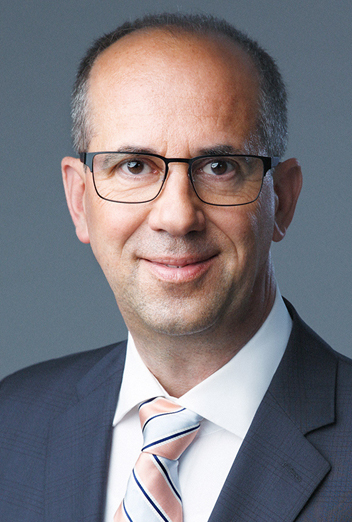
Diplomatic ties between Hungary and the U.S. reached a new high in 2025, according to Minister of Foreign Affairs and Trade Péter Szijjártó. “The recent political changes in the U.S. have been very favorable for Hungary. With President Trump in office, our governments now share a strong personal rapport, creating a promising foundation for economic cooperation,” he said. “We’re also addressing challenges left from the Biden era, including the termination of our double taxation agreement.”
November’s U.S.-Hungary governmental summit in Washington, D.C. was a milestone in the relationship. At present, there are around 1,400 U.S. companies based in the Central European country that are mainly operating in the automotive, software and life sciences sectors. But agreements signed at the summit have opened new trade and investment opportunities. In energy, for example, Hungary will spend an estimated $600 million on U.S. liquefied natural gas to diversify its fuel sources, while nuclear is set to become an even larger area of cooperation. “We’re exploring partnerships with the U.S. in nuclear technology, especially for small modular reactors,” Szijjártó noted. “Space is a further area of strategic collaboration. Despite our small size, Hungary has a strong legacy in space research, and we aim to leverage U.S. partnerships to become a global leader in that industry.” The summit also saw the two nations agreeing to collaborate more deeply in areas as diverse as defense, artificial intelligence and financial systems.
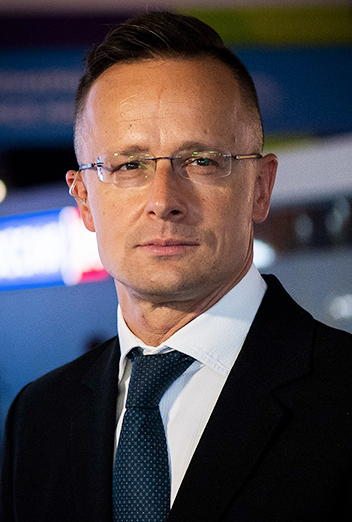
Szijjártó pointed out that Hungary’s robust food industry offers good investment potential as well. “We’re the only European country to enshrine in our constitution that the entire agricultural and food value chain must be free from genetically modified organisms, which allows us to meet evolving global standards and customer expectations rapidly,” he explained.
The minister is confident that the country provides the right environment for U.S. investors in all sectors. “Our 15 percent personal income tax rate and 9 percent corporate tax rate are the lowest in Europe, our education system is closely aligned with labor market needs, we are centrally located and have excellent infrastructure. Furthermore, our political system is stable with the same government in office for four consecutive terms, ensuring predictability and continuity for businesses,” he said. “It’s clear why Hungary attracts so many investors.”
The increasingly robust Hungarian banking sector generated a record net profit of $5.4 billion in 2024. Made up of 39 institutions, the sector has high liquidity and is well capitalized, according to Magyar Nemzeti Bank (MNB), the country’s central bank.
MNB aims to operate regulatory processes and monetary policies that are consistent, disciplined and transparent, with one of its main goals being to catalyze sustainable economic growth. Among its initiatives for driving this is a new certified loan scheme that encourages commercial banks to boost lending to small and medium-sized enterprises. Deputy State Secretary for International Financial Relations and Outward Investment Policy Márton Bókay explained: “SMEs are the backbone of our economy. Several programs were launched this year to support them, with more to come—this remains a top government priority.”
MNB is also facilitating economic development through digital banking innovations. For example, its instant electronic payment system has been operational since 2020 and this year it introduced Qvik, a mobile app that enables instant payments via QR codes. Today, about 80 percent of all Hungarian payment transactions are digital, thanks to the efforts of MNB, as well as traditional and online-only commercial banks. Another contributor is the nation’s thriving fintech ecosystem, which comprises 212 companies that achieved revenues of around $900 million in 2024.
MNB’s experience in digital banking has made it a key partner in the European Union’s ongoing design of bloc-wide regulatory frameworks for electronic financial services. The country also has an extensive presence on the wider global financial stage. “We maintain strong partnerships with institutions such as the European Bank for Reconstruction and Development, European Investment Bank, International Monetary Fund, World Bank and Asian Infrastructure Investment Bank,” Bókay said. “Hungary actively participates in joint projects and contributes expertise in sectors where we hold a competitive edge. We value these collaborations and will continue to build on them to support our economic growth.”