
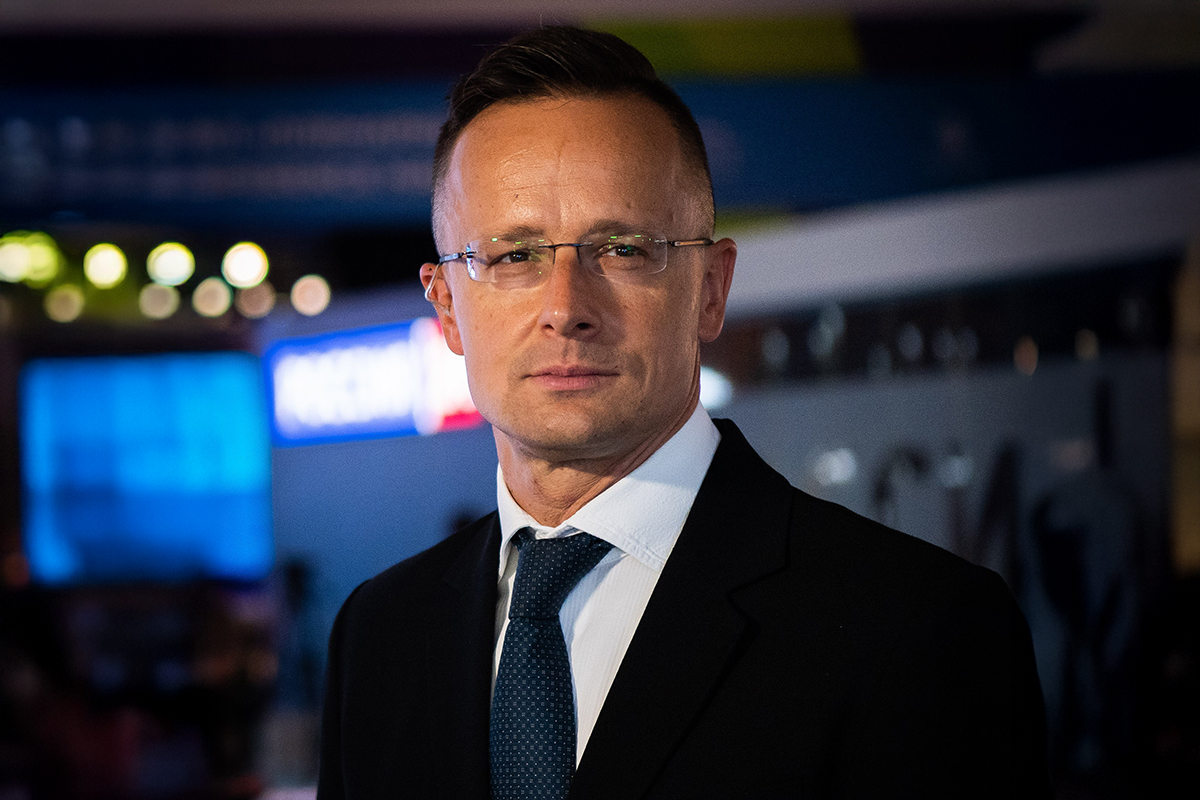
19 Jan Interview with Peter Szijjártó, Minister of Foreign Affairs and Trade Government of Hungary
You’ve spoken of Hungary’s “economic neutrality” balancing Eastern and Western investments and criticized the EU for missing opportunities in Africa and Asia. What is the roadmap for diversifying Hungary’s export markets beyond the EU?
Hungary’s central location in Europe shapes our economic strategy. Our goal is to be a hub connecting Eastern and Western economies, creating opportunities for Hungarian companies and products worldwide. While most of our exports—around 78–79 percent—go to EU countries, we are steadily increasing trade with the East and the United States. Since 2010, our “Eastern Opening” policy has aimed to integrate advanced technologies from the East into our economy.
The shift in the global economy toward Eastern markets is evident in investment patterns: Chinese investors are now Hungary’s second-largest investor group, contributing high-tech projects, well-paid jobs and growth opportunities. China’s strong investment presence is partly due to Hungary’s attractive business environment and partly because of the well-established German industry here. Hungary hosts major German automotive plants, including the world’s largest Mercedes factory, Audi’s largest engine plant and BMW’s exclusive electric car platform production.
This industrial base has also drawn Chinese investment, positioning Hungary as a leader in electric battery production and soon one of Europe’s top five countries producing over one million cars annually. These investments shape our export markets, with many products re-exported globally, especially to the U.S. Our overarching goal remains to be the economic meeting point between East and West.
Hungary is negotiating a U.S.–Hungary economic framework to counter potential tariffs and foster cooperation in sectors like space, energy and defence. Can you outline the strategic objectives and expected outcomes of this framework?
The recent political changes in the U.S. have been very favorable for Hungary. Relations under the previous Democratic administration were difficult, but with President Trump in office, our governments share a strong personal rapport, creating a promising foundation for renewed economic cooperation. We are also addressing challenges left from the Biden era, including the termination of the double taxation agreement. Hungary’s commitment to low taxes—15 percentpersonal income tax and nine percent corporate tax, the lowest in Europe—remains a key attraction. As a result, U.S. companies are now Hungary’s third-largest group of investors, valuing our business-friendly environment. There are 1,700 U.S. companies in Hungary, employing around 105,000 people.
Looking ahead, nuclear energy represents a key area for cooperation. Hungary relies on nuclear power for energy security, as we lack wind, hydro, oil or gas resources. We are exploring partnerships with the U.S. in nuclear technology, especially small modular reactors, which will be crucial for global energy security. Space is another area of strategic collaboration. Despite our small size, Hungary has a strong legacy in space research from the COMECON era. Today, we have a Hungarian astronaut on the International Space Station—the first in 47 years—and aim to become a global leader in the space industry, leveraging U.S. partnerships.
Hungary is also strong in the food industry because we take food security seriously. We are the only European country to enshrine in our constitution that the entire agricultural and food value chain must be GMO-free. This commitment allows us to meet rapidly evolving global standards and customer expectations.
With Hungary aiming to shift one-third of non-EU trade to countries outside Europe, how are you fostering synergies with regions like South America, Africa and Southeast Asia to build on current EU relations?
The European Union is losing competitiveness because trade is often politicized and over-ideologized in Brussels, delaying investment protection and free trade agreements. Hungary takes a different approach: we focus on mutual benefit and respect, separating trade from politics. This principle drives our success in Southeast Asia, Africa and Latin America. We have no colonial past and do not lecture other countries.
Through tied aid credit programs, Hungarian companies upgrade water management systems in countries like Laos, Cambodia, Uganda and Tanzania. Our expertise stems from Hungary’s geography and strong agricultural tradition, making our water management technologies world-class. These projects also help Hungarian companies gain long-term market presence abroad.
What is your final message to our readers?
Hungary attracts investors for clear reasons. We offer the lowest tax rates in Europe, an education system closely aligned with labor market needs and a central location with excellent infrastructure. Our stable political system—with the same government in office for four consecutive terms—ensures predictability and continuity for businesses.
Sorry, the comment form is closed at this time.