
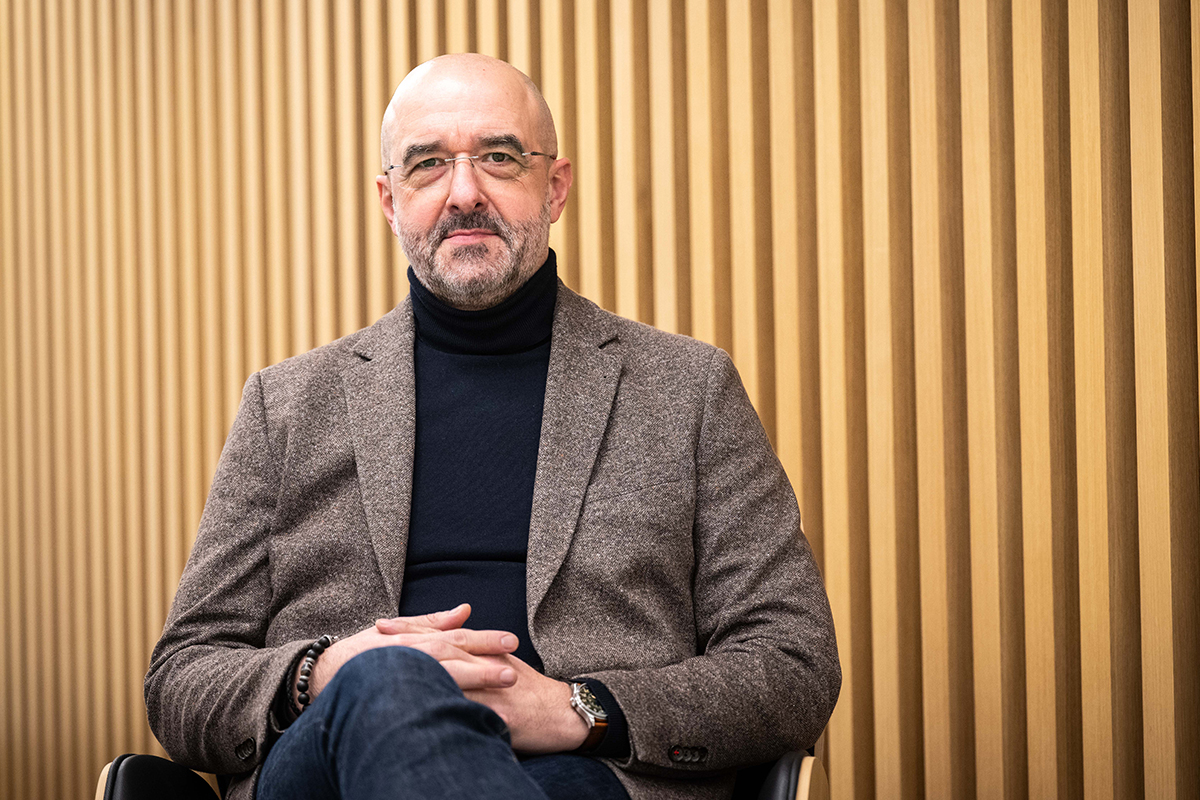
16 Jan Interview with Zoltán Kovács, State Secretary for International Communications and Relations, Hungary
Hungary’s recent EU Presidency marked a significant period of regional leadership, diplomatic engagement and agenda-setting within the European Union. How would you summarize Hungary’s key achievements during its 2024 EU Presidency?
Regarding Hungary’s EU presidency and how we see our role, it was clearly a political presidency, carried out in a somewhat hostile atmosphere—particularly from the European Parliament. Despite this, our goals were straightforward: if the EU wants to remain competitive in today’s changing global landscape, it must renew itself. Our presidency’s slogan, ‘Make Europe Great Again,’ reflected our political will to support that renewal. Competitiveness is not an abstract idea—it means responding effectively to current challenges and adapting our economic, social and institutional structures accordingly. Prime Minister Orbán has said for years that Europe has lost its way. Issues like high energy prices, overregulation and deindustrialization have weakened our position. That is why we put competitiveness at the heart of our political agenda.
The second half of last year was challenging—not only due to the political climate and ongoing war, but also because it was a transitional period for EU institutions. The European Parliament elections in June and the arrival of a new Commission marked a complete institutional renewal just before Hungary’s presidency began. Despite this, Hungary served as an honest broker at the technical level, successfully advancing all key dossiers. A highlight was the twin summit in Budapest on November 7–8, which brought together the European Political Community and an informal meeting of EU heads of state. Our presidency helped drive consensus around a Memorandum on Competitiveness, emphasizing the urgent need for action. While the new Commission and the Polish presidency have begun to build on this, real results are still pending—and time is moving fast.
Europe’s biggest challenge today is the combination of war and soaring energy prices. Sanctions have failed to change the course of the war or Russia’s behavior, but they have harmed Europe’s economy—especially by driving up energy costs. It’s hard to talk about competitiveness when European energy prices are three to five times higher than in the U.S. or China. The sooner we see peace talks and energy market normalization, the better for Europe. The EU’s proposal to cut off Russian nuclear energy ignores the reality faced by landlocked Central European countries like Hungary, which still depend on Russian energy due to geography and infrastructure. We support diversification—including U.S. and Gulf energy—but swapping one dependency for another isn’t true energy independence. Access to all sources, including Eastern ones, remains essential. This was a key issue during our presidency and still needs resolution.
Historically, Europe has succeeded by remaining open and flexible. For Hungary, an export-oriented economy, connectivity is essential and we believe it should be for Europe as well. Isolation, protectionism or cutting ties with major global players like Russia or China will only harm Europe’s competitiveness. Instead, Europe must stay connected to international markets—whether for trade, investment or energy. That is the key to maintaining our relevance and strength in the global order.
Migration continues to be a defining issue across Europe. Hungary has taken a firm stance in shaping both national and EU-level policy debates. Can you outline Hungary’s recent legislative actions on migration and how they reflect the country’s long-term strategy and how Hungary envisions the future of European border management?
Hungary’s stance on migration, especially illegal migration, has remained consistent for over a decade. We were among the first to act during the 2015 crisis, recognizing that unmanaged migration threatens Europe’s security and future. While we understand that some countries—like Germany, France and those in the Benelux—may need foreign labor, migration must be legal and orderly. The current system still allows uncontrolled entry at Europe’s borders which is unacceptable. We believe each country should decide whether to accept migrants, but any shared solution must focus on legality and border control.
Unfortunately, recent EU legislation continues old patterns without addressing the core issue of illegal migration. The strong opposition from countries like Poland to the EU’s migration pact clearly shows that this legislation does not serve the interests of many member states, especially in Central Europe. Hungary and others believe that participation in such schemes should be voluntary. If some countries choose to rely on external migration, it should be through legal and standardized processes—not through irregular, uncontrolled channels, which pose risks such as organized crime, cultural tensions and social instability, as seen in parts of Western Europe. Hungary’s position has been consistent for over a decade and will remain so. This reflects the clear mandate from the Hungarian people, confirmed through referenda and national consultations, where an overwhelming majority rejected migration as a long-term solution. Instead, Hungary has chosen to invest in family policies and support systems aimed at increasing birth rates and ensuring social sustainability through internal development.
Recent diplomatic criticisms from the United States have prompted Hungary to reassess its strategic positioning within the transatlantic framework. How would you characterize Hungary’s current relationship with the United States?
Under both the Biden Administration and the first Trump term, U.S. policy toward Hungary often took on an ideological tone. This was not only unwelcome to the Hungarian government, but also to many American investors operating here. The U.S. is Hungary’s third-largest investor, supporting hundreds of thousands of jobs. Companies consistently highlight Hungary’s favorable business environment and the mutual benefits of cooperation.
The Trump Administration brought a more pragmatic approach, restoring common sense to bilateral relations and strengthening ties between our business communities. However, energy remains a point of contention. The U.S. pushes for greater European reliance on American energy, but when U.S. energy is three to five times more expensive than alternatives, it undermines Europe’s competitiveness. Our position is clear: energy policy must support, not hinder, economic performance. We understand how the Trump Administration may approach trade, tariffs and taxation with Europe. The EU had ample time to prepare, but it seems unready for a potential trade dispute with the U.S. Common sense must prevail. Both sides have clear interests—Hungary, for example, has a strong, export-driven car industry. A mutually beneficial deal is possible, but it requires flexibility and smart negotiation.
Hungary remains open and engaged and we continue to urge the European Commission to prioritize agreements that protect member states’ economic interests. Minimizing tariffs, taxes and trade barriers is essential for Europe’s—and Hungary’s—economic future.
With the next electoral cycle in sight, Hungary’s economic direction will be crucial for both domestic growth and international investment. What are Hungary’s primary economic priorities as the country looks ahead to the 2027 elections?
Hungary’s economic strategy is not tied to election cycles. For the past four elections, our approach has remained consistent—focused on connectivity, openness and attracting investment from all over the world. Political stability and peace are essential to support this. From the start of the war in Ukraine, Hungary has called for negotiations and peaceful solutions to all geopolitical conflicts. Our foreign policy is based on common sense and pragmatism, keeping Hungary open and engaged with all global partners. Hungary maintains open dialogue with Russia despite political pressures, especially on energy, industry and economic cooperation. At the same time, we have strong ties with China, Europe and the United States. This is not contradictory—it’s our balanced approach.
In recent years, investment in Hungary has become more diverse. Last year and this year, Chinese investment has led, bringing advanced, high-value sectors like electric vehicles and battery production (BYD and CATL). These investments take place across Hungary, from the southeast (Ságar) to the east (Debrecen). Meanwhile, BMW is starting production here this year. Our goal is for all these investments to coexist, foster competition and boost innovation. For example, BYD’s new European research and development center is located in Hungary. This approach reflects Hungary’s natural economic position regionally and globally and is driven by our political leadership’s focused efforts
What are Hungary’s key communication strategies to shape its international perception and how is the country leveraging cultural diplomacy, conservation and soft power to expand its global footprint?
Our economic investment strategy remains unchanged because we accept that the political criticism against Hungary from some parts of Europe and the world won’t shift. We have a different, patriotic vision for Europe and our country’s future—one many oppose. Over the past 15 years, we have learned this political struggle won’t change others’ mindsets. Yet, through clear policies and new measures, we continue to create an attractive investment environment where entrepreneurs can achieve their goals in Hungary. The record investment years behind us speak for themselves.
Regarding Hungary’s public image, tourism is the best showcase. Although COVID-19 caused major disruptions, the past two to three years have seen record domestic and international tourism, showing renewed interest in Hungary. Thanks to a focused government and tourism agency strategy, Hungary’s quality services and popular destinations now speak for themselves. Visitors leave with a far better experience than political rhetoric suggests. Tourism remains a priority and a strong contributor to Hungary’s GDP, with growth expected in the coming years.
Sorry, the comment form is closed at this time.